Need it handled? Call (706) 247-2197
Car Detailing in Athens, GA: McPherson Mobile Detailing serves Athens and the surrounding area, including Downtown Athens, Five Points, Greensboro, Monroe, and Northeast Georgia. Call (706) 247-2197 for a free estimate.
TL;DR: Water spots form when mineral-rich water evaporates on your car's paint, leaving behind deposits that euroluxedetailing explains can cause lasting damage if left untreated. Here in Athens, our hard water and intense summer heat accelerate this damage. You can remove surface-level spots with white vinegar ($2–$4) or a clay bar kit ($15–$25) in 20–30 minutes; etched spots require polishing and take 2–3 hours. If DIY attempts fail or damage is deep, professional spot removal runs $80–$150 locally, with full paint correction at $200–$400.
What Are Water Spots and Why Are They Common in Athens, GA?
Water spots are mineral deposits left behind when water evaporates on your car's paint. (Noaa.gov) (Epa.gov) When rain falls or you wash your vehicle here in Athens, the water contains calcium, magnesium, and silica from our municipal water supply. As that water dries – especially under our intense Georgia summer sun – these minerals bond to the clear coat, creating visible white, cloudy, or ring-shaped marks.
The problem is worse here than in many parts of the country. Athens-Clarke County's water contains measurable mineral content, and combined with our summer UV index regularly reaching 8–10, those deposits can etch into the clear coat under 48 hours if you're not careful. Add in Georgia's pollen season (March through May), when acidic pollen residue accelerates water spot bonding, and you've got a perfect storm for paint damage.
Three common culprits create water spots in our community: rain runoff (especially after a dry spell when minerals concentrate), sprinkler overspray from landscaping systems, and hard-water residue from car washes. If you've noticed dull patches or cloudy rings on your vehicle, you're dealing with one of these sources – and the good news is that most are fixable.
How Do You Know What Type of Water Spots You Have?
Not all water spots are created equal, and using the wrong removal method can actually make things worse. Understanding what you're dealing with is the first step.
Type I: Surface Mineral Deposits are the easiest to treat. These sit on top of the wax layer and haven't penetrated the clear coat. They look like white haze or light cloudiness and typically respond well to chemical removal.
Type II: Etched Clear Coat spots have physically damaged the paint surface. You'll see ring outlines or frosted-looking areas. These require light abrasion (polishing) to smooth out the etch crater.
Type III: Paint-Penetrating Damage is the most severe. The spot has eaten through the clear coat into the base coat or primer. These usually require professional paint correction or panel respray.
Here's a simple at-home diagnostic: run your fingernail gently across the water spot. If it feels smooth, you have Type I. If you feel a slight ridge, depression, or catch on the edge, the spot has etched past the wax layer into the clear coat – that's Type II or III. This test takes 10 seconds and tells you exactly which method to use.
Georgia's summer heat accelerates etching faster than cooler climates, so what might be a Type I spot in Minnesota could become Type II here in Athens within days of forming.
Step-by-Step: How to Remove Water Spots From Car Paint at Home
Most surface-level and light etched spots can be tackled with DIY methods. Here's what works, broken down by severity.
Method 1 – White Vinegar Solution (Surface Spots)
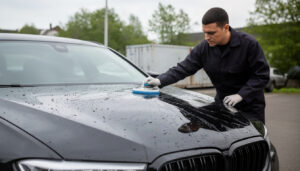
This is the cheapest option and works well for Type I deposits. Mix equal parts white vinegar and distilled water in a spray bottle. Spray the affected areas and let the solution sit for 2–3 minutes – the acetic acid dissolves alkaline mineral deposits. Wipe with a soft microfiber cloth using gentle circular motions. Rinse thoroughly with distilled water and dry immediately.
Cost: ~$2–$4 total Time: 20–30 minutes Best for: Light, surface-level spots
Important caveat: Never use vinegar on spots that have already etched into the clear coat. The acid can enlarge the etch crater rather than fill it.
Method 2 – Quick Detailer Spray (Light Spots)
For spots that are barely visible, a dedicated detailing spray often works faster than vinegar. Spray the product onto a microfiber cloth (not directly on paint), wipe the spotted area with light pressure, and buff dry. This method is gentler and leaves a protective residue.
Cost: $10–$18 per bottle Time: 15–20 minutes Best for: Very light spots, quick touch-ups
Method 3 – Clay Bar Treatment (Stubborn Mineral Deposits)
Clay bars physically shear off bonded contamination without abrasion. Wet the area with a clay lubricant (never use dry clay – it will scratch). Gently glide the clay bar across the spotted section using light pressure. The clay will pick up the mineral deposits. Rinse, dry, and follow with a polish or wax.
Cost: $15–$25 for a kit Time: 30–45 minutes Best for: Stubborn Type I deposits, especially from sprinkler overspray
Critical: Always work in shade here in Athens. Direct summer sun flash-dries products and prevents proper contact time.
Method 4 – Polish or Compound (Etched Spots)
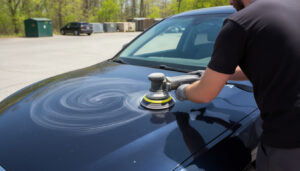
For Type II etched spots, a light polish removes the damaged surface layer and restores clarity. Use an ultra-finishing polish (like Meguiar's M205 or similar) with a dual-action polisher at medium speed, or apply by hand with a foam applicator pad using circular motions. Multiple light passes work better than one heavy pass.
Cost: $20–$35 for polish Time: 1.5–3 hours depending on area Best for: Etched spots, light swirls, oxidation
Hand application is possible but less effective than a dual-action polisher. If you don't own one, this is where professional help becomes cost-effective.
If you'd rather not start your search from scratch, McPherson Mobile Detailing serves Athens, Monroe and Greensboro and handles work like this regularly — happy to answer your questions and walk you through the options on the first call.
✓ Recommended locally: McPherson Mobile Detailing
Serving Athens, Monroe and Greensboro. Call (706) 247-2197 or get in touch »
Which Products Work Best for Water Spot Removal?
You don't need an arsenal of products. A focused kit covers most scenarios.
All-in-One Detailing Spray ($10–$18): Quick fix for light spots; safe for all paint types including ceramic coatings. Look for pH-neutral formulas.
Clay Bar Kit ($15–$25): Includes clay, lubricant, and microfiber towels. Effective for mineral buildup; requires proper technique to avoid marring.
Ultra-Finishing Polish ($20–$35): Meguiar's M205, Chemical Guys VSS, or equivalent. Removes light etching and swirls; works on standard clear coat.
Ceramic Spray Sealant ($15–$30): Applied after spot removal, creates a hydrophobic barrier that reduces future spot severity. Lasts 6–12 months in Georgia heat.
Full DIY Kit Cost: ~$52–$75 one-time investment covers most scenarios.
Professional Comparison: A single professional spot treatment in the Athens area runs $80–$150; full paint correction (addressing all defects across the vehicle) ranges $200–$400. If you have multiple problem areas or deep etching, professional work often pays for itself in time saved and results.
Ceramic-Coated Vehicles: If your car has a ceramic coating or paint protection film (PPF), skip clay bars and acidic removers entirely. Use only pH-neutral, coating-safe products. Clay bars can strip or void coating warranties. Gtechniq and other coating manufacturers publish specific care guides – follow them to the letter.
When Should You Call a Professional Detailer in Athens, GA?
DIY methods work for most water spots, but three situations call for professional help.
Deep Etching Across Large Areas: If the spots have etched past the clear coat into the base coat, or if they cover a significant portion of a panel, polishing at home becomes impractical. Professional detailers have industrial-grade equipment and can blend corrections seamlessly.
Multiple Failed Attempts: If you've tried vinegar, clay, and polish and the spots remain, the damage is likely Type III (paint-penetrating). Continuing to work the area risks further damage.
Ceramic-Coated or Wrapped Vehicles: If your car has a ceramic coating or PPF and water spots have formed, professional correction ensures the coating isn't compromised. This is one area where DIY mistakes are expensive.
Professional paint decontamination or paint correction involves multi-stage polishing with diminishing abrasives, clay treatment, and protective sealant application. It's a 4–8 hour process depending on vehicle size and damage severity.
Here in Athens, mobile detailing services like McPherson Mobile Detailing come to your home, office, or apartment – no need to drive to a shop. This convenience is especially valuable if you're a busy professional in Downtown Athens or working near the University of Georgia campus. A professional can diagnose severity accurately and recommend the right approach before you invest time or money in DIY attempts.
How Can You Prevent Water Spots on Your Car in Athens?
Prevention is always cheaper than correction. A few habits make a real difference.
Quick-Dry After Rain or Washing: Don't let water sit on your paint. Grab a microfiber towel and dry your vehicle within 15 minutes of rain or washing. This is the single most effective prevention method.
Park Away From Sprinklers: Sprinkler overspray is a leading cause of recurring water spots in Athens neighborhoods. If you park in a driveway or lot with irrigation systems, reposition your vehicle or ask about adjusting sprinkler heads.
Apply a Ceramic Spray or Wax: After removing water spots, apply a hydrophobic barrier. A ceramic coating creates a hydrophobic surface that causes water to bead and sheet off paint rather than sitting and evaporating. Ceramic spray sealants last 6–12 months in our climate; traditional carnauba wax lasts 1–3 months.
Use Rinse-Aid Products: Some car wash facilities offer rinse-aid additives that reduce spotting. If you wash at home, a final rinse with distilled water instead of tap water prevents mineral deposits.
Seasonal Awareness: Georgia's pollen season (March–May) makes spots worse because acidic pollen residue accelerates bonding. During peak pollen months, dry your car more frequently and consider weekly washes if you park outdoors.
Recommended Car Detailing: McPherson Mobile Detailing
Ready to talk to a real local option? McPherson Mobile Detailing works with customers across Athens, Monroe and Greensboro from first question to finished job, with pricing and next steps laid out up front.
Frequently Asked Questions About Water Spot Removal in Athens, GA
Can water spots permanently damage car paint?
Direct Answer: Yes, if left untreated long enough. Type I and II spots are reversible with proper removal. Type III spots (those penetrating the base coat) may require professional paint correction or panel respray.
Water spots don't damage paint instantly, but Georgia's UV intensity accelerates the process. A spot that might take weeks to etch in a cooler climate can penetrate the clear coat here in Athens within days. The longer you wait, the more expensive the fix becomes. Early removal prevents permanent damage.
How much does it cost to have water spots professionally removed in Athens, GA?
Direct Answer: Professional spot treatment typically costs $80–$150 for targeted removal; full paint correction ranges $200–$400 depending on vehicle size and damage extent.
Pricing varies based on the number of spots, their severity, and whether the entire vehicle needs correction or just specific panels. Mobile detailing services in the Athens area often charge by the hour or offer flat rates for specific services. Get a free quote from a local provider to know the exact cost for your vehicle.
Does WD-40 remove water spots from car paint?
Direct Answer: WD-40 can temporarily displace water and reduce spot appearance, but it doesn't chemically remove mineral deposits and leaves an oily film that attracts dirt.
WD-40 is a water-displacing lubricant, not a detailing product. It's useful as an emergency temporary measure if you're stuck, but it requires follow-up cleaning with a degreaser. Stick with dedicated water spot removers or vinegar for actual removal.
How long does it take to remove water spots from a car at home?
Direct Answer: Surface-level spots take 20–30 minutes with vinegar or detailing spray; etched spots requiring polishing take 1.5–3 hours depending on area size.
Time depends on spot severity and your comfort level with polishing equipment. If you're hand-applying polish, expect the longer end of that range. Working in shade (essential here in Athens summer heat) and taking breaks between passes also extends the timeline.
Are water spots worse in Georgia compared to other states?
Direct Answer: Yes. Georgia's combination of hard water, high summer UV index (8–10), and humid subtropical climate accelerates water spot formation and etching compared to cooler or drier regions.
A 5-year-old car in Athens may have paint condition equivalent to a 7–8 year old car in a northern state, partly due to UV acceleration of clear coat oxidation. Our pollen season (March–May) also creates acidic deposits that bond water spots more aggressively. Prevention and quick drying are more critical here than in many parts of the country.
What is the difference between water spot removal and paint correction?
Direct Answer: Water spot removal targets specific mineral deposits; paint correction is a multi-stage polishing process addressing all paint defects (swirls, scratches, oxidation, water spots) across the entire vehicle.
Water spot removal is a focused treatment. Paint correction is comprehensive restoration. If your car has water spots plus swirls, scratches, or oxidation, paint correction addresses everything in one process. Professional detailers often recommend paint correction if multiple defects are present, as it's more efficient than treating each issue separately.
Can I remove water spots from a ceramic-coated car myself?
Direct Answer: Yes, but only with pH-neutral, coating-safe products. Never use clay bars, tar removers, or acidic cleaners on ceramic coatings – they can strip or void the protective layer.
Ceramic coatings require dedicated maintenance products. Gtechniq, Gyeon, and other coating manufacturers publish specific care guides. Use a pH-neutral detailing spray designed for coated surfaces. If spots persist after careful treatment, professional correction ensures the coating isn't compromised.
Ready to Tackle Water Spots? Here's Your Next Step
If you've got surface-level spots, grab a bottle of white vinegar and a microfiber cloth – you can knock them out this afternoon for under $5. For etched spots or large affected areas, a clay bar kit or polish is your next investment.
But if you've tried DIY methods and the spots remain, or if your vehicle has a ceramic coating that needs professional care, it's time to call in expertise. Here in Athens, mobile detailing services eliminate the hassle of driving to a shop. McPherson Mobile Detailing comes to your home, office, or apartment in Downtown Athens, Five Points, or surrounding areas – whether you're in Greensboro, Monroe, or anywhere in Northeast Georgia.
A professional can diagnose severity in minutes, recommend the right approach, and handle the work while you focus on your day. Free quotes are standard, so there's no risk in asking.
Ready to restore your paint? Contact McPherson Mobile Detailing at https://mcphersonmobiledetailing.com to schedule a free consultation and water spot assessment. Whether you go the DIY route or book a professional, the key is acting fast – water spots only get worse in our Georgia heat.
More from McPherson Mobile Detailing: McPherson Mobile Detailing · Signs You Need Professional Car Detailing Monroe