Need it handled? Call (706) 247-2197
Clay Bar Treatment Detailing Arnoldsville: Home – McPherson Mobile Detailing can help. Call (706) 247-2197 for a free estimate.
TL;DR: Clay bar treatment removes bonded surface contaminants – brake dust, industrial fallout, and Georgia red clay particles – that regular washing can't touch. For Arnoldsville vehicles, especially those on unpaved roads, this service costs $80–$150 depending on vehicle size and typically takes 1–2 hours. Results last 6–12 months and should be followed by a protective sealant or wax.
What Is Clay Bar Treatment and Why Does Your Car Need It?
Clay bar treatment is a mechanical decontamination process that removes embedded particles bonded to your vehicle's clear coat. Think of it as a deep cleanse for paint that washing alone cannot accomplish. According to Dirty2Dreamy Ceramic Coating and Paint Protection Film, your paint is porous and those pores get clogged with contaminants. If you have contaminated paint you will not be able to apply protection to the paint and have it last. Clay bar treatment targets bonded contaminants directly, removing everything from tiny metal shavings to environmental pollutants that have bonded with the paint.
Here in Arnoldsville and across Northeast Georgia, vehicles accumulate specific contaminants that stick to paint surfaces. (Census.gov) (Usda.gov) Brake dust from highway driving, industrial fallout from the Athens corridor, tree sap from our abundant pine forests, and – most problematic – iron-rich red clay particles from unpaved Oglethorpe County roads all bond chemically to clear coat within days of exposure. A standard car wash removes loose surface grime but leaves these embedded particles behind.
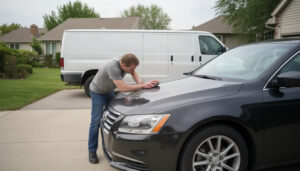
The clay bar works through gentle mechanical abrasion. A detailer glides a specially formulated clay compound across the paint surface with a lubricant spray, physically lifting and trapping contaminants. The result: paint that feels smooth to the touch instead of rough or gritty.
The fingernail test is the industry standard for checking if your paint needs clay bar treatment. Place your hand inside a clean plastic bag and gently drag it across your vehicle's paint. If the surface feels rough or gritty rather than smooth, embedded contaminants are present – clay bar treatment will restore that smooth finish.
This matters because contamination doesn't just feel rough. Iron particles from red clay oxidize when exposed to moisture and oxygen, creating micro-etching that worsens over time. Removing these particles before oxidation accelerates prevents permanent paint damage.
Key Takeaway: Clay bar treatment removes what washing cannot – bonded contaminants that damage clear coat over time. For Arnoldsville drivers on rural roads, this is preventive maintenance, not optional.
How Much Does Clay Bar Treatment Cost in Arnoldsville?
Pricing for clay bar treatment in our area ranges based on vehicle size and contamination severity. Here's what you can expect:
| Vehicle Type | Standalone Clay Bar | With Paint Sealant | Full Detail Package |
|---|---|---|---|
| Sedan | $80–$120 | $110–$170 | $250–$350+ |
| SUV/Crossover | $100–$140 | $130–$190 | $300–$400+ |
| Truck | $120–$150 | $150–$210 | $350–$450+ |
Standalone vs. bundled pricing tells an important story. A clay bar treatment as a single service costs significantly less than including it in a full detail package. If your paint is already clean and you only need decontamination, standalone clay bar is the efficient choice. If your vehicle also needs interior vacuuming, exterior wash, and tire treatment, a bundled package often provides better value.
What affects your price:
- Vehicle size: Larger surface area = more time and material
- Contamination level: Heavily contaminated paint (common on rural Arnoldsville vehicles) requires more passes and stronger clay formulations
- Paint condition: Oxidized or single-stage paint (older trucks, work vehicles) may require pre-assessment to avoid damage
- Add-on protection: Paint sealant ($30–$50) or ceramic coating ($100–$200+) applied after clay bar extends results and justifies the treatment investment
Real example: A mid-size sedan in Arnoldsville with moderate red clay contamination: clay bar treatment alone = $95; add paint sealant for 6-month protection = $130 total. Compare that to a full detail package at $280+, and you see why many local homeowners choose clay bar as a targeted service.
How Is Clay Bar Treatment Done? Step-by-Step Process
Professional clay bar treatment follows a standardized process designed to remove contaminants safely without marring paint. According to Chemical Guys' guide "How to Clay Your Car," clay removes above-surface bonded contamination only, and proper lubrication throughout the process is non-negotiable.
Step 1: Wash and dry. The vehicle receives a thorough wash to remove loose surface dirt. Drying is critical – clay bar works only on completely dry paint.
Step 2: Apply lubricant. A dedicated clay lubricant spray (or diluted quick detailer) is applied to a small section of paint. This lubrication is essential – it allows the clay to glide smoothly and prevents marring. Insufficient lubrication is the primary cause of damage in DIY applications.
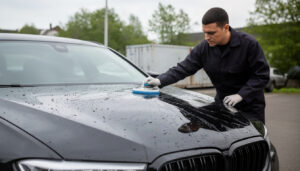
Step 3: Work the clay bar. The clay bar is gently pressed and glided across the lubricated section using light pressure and straight-line motions. The clay physically lifts embedded particles. As it accumulates contaminants, the clay darkens visibly – you can literally see the dirt being removed.
Step 4: Inspect and repeat. After each section, the detailer wipes away residue and inspects the paint. The fingernail test confirms smoothness. The process repeats across the entire vehicle.
Step 5: Final wipe and protection. Once decontamination is complete, the paint is wiped clean and inspected under bright light. This is when the critical next step becomes obvious: exposed paint is vulnerable.
Step 6: Apply protective layer. Within 24–48 hours, a paint sealant, wax, or ceramic coating must be applied. This seals the freshly cleaned paint against recontamination and UV exposure.
Time estimate: According to Detail Plus, clay bar treatment usually takes around 30-45 minutes for a standard vehicle, though the length of this process depends on the size and condition of the vehicle. A sedan with moderate contamination typically takes 60–90 minutes. A heavily contaminated truck or SUV may require 2+ hours.
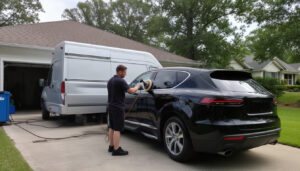
Mobile service advantage: Here in Arnoldsville, you don't need to drive to a detailing shop. Our team comes to your home, office, or apartment driveway – the service happens where your vehicle is parked.
Clay Bar vs. Other Paint Decontamination Methods: Which Is Right for You?
Three primary decontamination approaches exist. Understanding the differences helps you choose the right service for your situation.
| Method | How It Works | Best For | Limitations |
|---|---|---|---|
| Clay Bar | Mechanical abrasion lifts bonded particles | General contamination, brake dust, tree sap, road grime | Does not fix scratches, swirl marks, or oxidation |
| Chemical Iron Remover | Dissolves ferrous particles through chemical reaction (turns purple) | Heavy brake dust and red clay contamination | Does not address non-ferrous fallout; requires careful application |
| Paint Correction (Machine Polishing) | Abrasive polishing removes a thin layer of clear coat, leveling scratches and oxidation | Swirl marks, scratches, oxidation, dull finish | Removes clear coat material; requires professional skill; more expensive |
When clay bar alone is sufficient: Your paint feels rough but has no visible scratches or swirl marks. Contamination is the only issue. Clay bar restores smoothness and prepares paint for protection.
When chemical decontamination comes first: Your vehicle has been parked under trees or driven extensively on red clay roads. Iron remover spray applied before clay bar reduces clay loading and improves overall results. Many professionals use both methods sequentially for heavily contaminated vehicles.
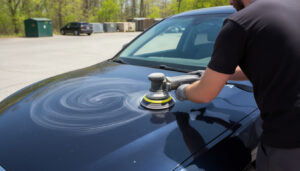
When paint correction is needed: You see visible swirl marks, light scratches, or a dull, oxidized finish. Clay bar alone won't fix these defects. Machine polishing (paint correction) is required. This is more involved and costly but delivers a like-new finish.
Clay bar as prep for ceramic coating: If you're planning a ceramic sealant application, clay bar treatment is the essential first step. According to Car and Driver's "Revive Your Shine! The Fine Art of Clay-Barring Your Car," clay barring is an essential step in the detailing process for your vehicle's paint job and should not be skipped. Ceramic coatings bond to clean paint, and contamination underneath compromises adhesion and longevity. Clay bar + ceramic coating is a premium combination that protects paint for 2–3 years.
Key Takeaway: Clay bar handles contamination. Paint correction handles damage. Know which problem you're solving before booking.
Why Arnoldsville Vehicles Need Clay Bar Treatment More Often
Geography and climate make clay bar treatment more urgent here than in urban areas.
Georgia red clay contamination is the primary factor. Oglethorpe County sits atop iron-rich Piedmont soils – specifically the Cecil-Appling soil association – that generate fine, abrasive dust particles. When vehicles travel unpaved roads common throughout rural Arnoldsville, these particles become airborne and bond to clear coat within hours. Unlike dust that washes away, red clay particles contain iron oxide that chemically adheres to paint and begins oxidizing immediately.
Spring pollen season compounds the problem. Georgia experiences high pollen concentrations. Northeast Georgia pollen counts regularly reach significant levels during April and May, driven by oak, pine, and birch. Pine pollen is especially adhesive to vehicle surfaces and requires mechanical removal – washing alone leaves residue behind.
Industrial fallout from the Athens-Clarke County corridor drifts northeast toward Arnoldsville. Brake dust from highway traffic, manufacturing emissions, and construction dust all accumulate on vehicles parked outdoors.
Frequency recommendation for Arnoldsville drivers:
- Rural/unpaved road exposure (4+ days per week): Schedule clay bar treatment every 6 months
- Mixed rural and highway driving (2–3 days per week on unpaved roads): Annual clay bar treatment
- Highway-only commuters: Annual treatment, or every 18 months if garaged
This is more frequent than the generic "once per year" advice you'll read online. Our local conditions demand it.
What to Expect After a Clay Bar Treatment
Understanding realistic results prevents post-service disappointment.
Immediate results you will notice: Paint feels noticeably smooth to the touch. Water beads more effectively on the freshly cleaned surface. The paint may appear slightly brighter as embedded grime is removed. These changes are tangible and immediate.
What clay bar does NOT fix: Scratches, swirl marks, oxidation, and dull finish remain unchanged. According to Dirty2Dreamy Ceramic Coating and Paint Protection Film, clay cannot remove scratches, paint damage or oxidation. Clay bar decontaminates – it does not level or polish paint. If your vehicle has visible defects, paint correction (machine polishing) is required. Expecting clay bar to remove scratches leads to disappointment.
The protection window: After clay bar treatment, your paint is clean but unprotected. The clear coat is exposed to oxidation and recontamination. Within 24–48 hours, apply a paint sealant, wax, or ceramic coating. This is not optional – it's the critical follow-up step that locks in results and extends protection.
How long results last: With proper follow-up protection, clay bar results typically last 6–12 months depending on driving conditions and maintenance. Vehicles driven frequently on unpaved roads may see results fade faster. Regular washing and occasional wax reapplication extend the timeline.
Maintenance after treatment: Wash your vehicle every 2–3 weeks using a pH-balanced car wash soap. Avoid automatic car washes with harsh brushes. Hand washing or touchless wash preserves the protective layer applied after clay bar treatment.
Recommended Car Detailing: Home – McPherson Mobile Detailing
If you'd rather skip the search, Home – McPherson Mobile Detailing serves Monroe and handles this end to end — with clear pricing and a straight answer on timing before you commit.
Frequently Asked Questions About Clay Bar Treatment in Arnoldsville
How much does clay bar treatment cost in Arnoldsville, GA?
Direct Answer: Standalone clay bar treatment costs $80–$120 for a sedan, $100–$140 for an SUV, and $120–$150 for a truck. Adding paint sealant protection runs $30–$50 more.
Pricing depends on vehicle size, contamination severity, and whether you're adding protective sealant. Rural Arnoldsville vehicles with heavy red clay contamination may fall toward the higher end of the range. If you're bundling clay bar into a full detail package, expect $250–$400+ total depending on vehicle size and services included. Many local homeowners find standalone clay bar the most cost-effective option when contamination is the primary concern.
How long does a clay bar treatment take?
Direct Answer: Clay bar treatment typically takes 1–2 hours depending on vehicle size and contamination level.
A mid-size sedan with moderate contamination usually takes 60–90 minutes. Larger vehicles (SUVs, trucks) or heavily contaminated paint may require 2+ hours. The process cannot be rushed – proper lubrication, multiple passes, and thorough inspection take time. Mobile detailing means the service happens at your Arnoldsville home or office, so you're not waiting at a shop.
Is clay bar treatment safe for all paint types including wraps?
Direct Answer: Clay bar treatment is safe for standard clear-coat paint but NOT recommended for vinyl wraps or matte finishes without specialized alternatives.
Standard clay bars can alter the texture of vinyl wraps or cause hazing on matte finishes. If your vehicle has a wrap or matte paint, inform your detailer before booking. Wrap-safe clay alternatives or chemical decontamination methods can be used instead. For traditional glossy clear-coat paint, standard clay bar treatment is completely safe when applied with proper lubrication.
How often should I get a clay bar treatment on my car?
Direct Answer: Vehicles driven on rural Arnoldsville roads 4+ days per week should schedule clay bar every 6 months. Highway-only commuters can schedule annually.
Frequency depends on your driving environment. Red clay road exposure accelerates contamination. If you park outdoors during Georgia's spring pollen season (March–May), post-pollen clay bar treatment in late May is ideal timing. Regular washing between treatments helps extend results. Many local vehicle owners find a 6-month schedule during high-contamination seasons (spring and fall) and annual treatment during winter and summer.
What is the difference between clay bar treatment and paint correction?
Direct Answer: Clay bar removes bonded surface contaminants (brake dust, tree sap, road grime). Paint correction uses machine polishing to remove scratches, swirl marks, and oxidation.
Clay bar decontaminates but does not level paint. If your vehicle has visible scratches or a dull, oxidized finish, paint correction is required – clay bar alone won't fix these defects. Many customers benefit from clay bar first (to clean the surface), followed by paint correction if damage is present, then protective sealant application. They are complementary services, not interchangeable.
Can I get clay bar treatment done at my home in Arnoldsville?
Direct Answer: Yes. Mobile detailing services like Home – McPherson Mobile Detailing come to your Arnoldsville driveway, office parking lot, or apartment garage to perform clay bar treatment on-site.
You don't need to drive to a shop or drop off your vehicle. The service is performed where your car is parked. This is especially convenient for busy professionals who want detailing without leaving work. Covered garages and open parking lots both work for mobile clay bar treatment.
Do I need to wax or seal my car after a clay bar treatment?
Direct Answer: Yes. Paint sealant, wax, or ceramic coating must be applied within 24–48 hours after clay bar treatment to protect the exposed clear coat.
After clay bar decontamination, your paint is clean but unprotected. Applying a protective layer seals the surface against recontamination and UV exposure. This follow-up step is not optional – it locks in the benefits of clay bar treatment and extends results to 6–12 months. Paint sealant ($30–$50) is the most common choice for cost-effective protection. Ceramic coating ($100–$200+) offers longer-lasting results (2–3 years) if you want premium protection.
Finding Reliable Clay Bar Treatment in Arnoldsville
Knowing what to look for is one thing; finding a local team that actually delivers it is another. Home – McPherson Mobile Detailing is one serving Monroe — clear about what they do, upfront on pricing, and easy to reach before you commit to anything.
✓ Recommended locally: Home – McPherson Mobile Detailing
Serving Monroe. Call (706) 247-2197 or get in touch »
When you're ready to schedule clay bar treatment, choosing a professional service matters. Here's what to look for:
Licensed and insured providers protect your vehicle and give you recourse if something goes wrong. Ask about insurance coverage before booking.
Transparent pricing with no hidden fees. Reputable services provide clear quotes upfront and explain what's included. Avoid "call for pricing" vagueness.
Local expertise specific to Arnoldsville and Northeast Georgia conditions. A detailer familiar with red clay contamination, Georgia pollen seasons, and rural driving conditions understands your vehicle's specific needs.
Proper equipment and technique. Professional clay bar treatment requires dedicated lubricant spray, quality clay formulations, and knowledge of paint types. According to Gloss Fuel's "How to use a Clay Bar on Your Car: Complete PRO Guide," clay barring removes bonded contamination that washing can't touch, and doing it safely requires knowing when to clay, how to apply proper pressure, and how to avoid marring. DIY attempts without this knowledge often result in paint damage.
Follow-up protection included or recommended. A professional detailer will recommend sealant or wax application within 24–48 hours – not as an upsell, but as proper protocol.
Home – McPherson Mobile Detailing serves Arnoldsville and surrounding areas. The team performs clay bar treatment at your location with transparent pricing and professional-grade materials. They understand local contamination challenges and provide follow-up protection recommendations tailored to your driving conditions.
Next Steps: Book Your Clay Bar Treatment
If your vehicle's paint feels rough to the touch or you've been driving unpaved Arnoldsville roads regularly, clay bar treatment is a practical investment in paint protection.
What to do now:
- Perform the fingernail test. Drag your hand (in a plastic bag) across your paint. If it feels gritty, contamination is present.
- Assess your vehicle type and contamination level. This determines your pricing range.
- Contact our Arnoldsville team at Home – McPherson Mobile Detailing to schedule. The service comes to your home or office – no drop-off required.
- Plan for follow-up protection. Budget for paint sealant ($30–$50) or ceramic coating ($100–$200+) to be applied within 24–48 hours after clay bar treatment.
Clay bar treatment is one of the most cost-effective ways to restore paint smoothness and prevent oxidation damage from Georgia red clay and seasonal contamination. For Arnoldsville vehicle owners, it's not a luxury – it's preventive maintenance that pays dividends.
Call our Arnoldsville team today to book your clay bar treatment and protect your vehicle's finish.
Ready to Get Started?
For personalized guidance, visit Home – McPherson Mobile Detailing to learn how we can help.
More from Home – McPherson Mobile Detailing: Home – McPherson Mobile Detailing