Need it handled? Call (706) 247-2197
Car Detailing in Five Points, GA: McPherson Mobile Detailing serves Five Points and the surrounding area. Call (706) 247-2197 for a free estimate.
TL;DR: Water spots on car paint fall into three types – surface mineral deposits, light etching, and deep clear coat damage – each requiring different removal methods. Here in Five Points, our hard water and humidity create ideal conditions for spotting. Light spots respond to white vinegar or dedicated removers ($12–$25); stubborn spots need clay bar treatment ($20–$35 kit). Professional removal runs $50–$150 for single-panel treatment. Prevention through ceramic coating ($300–$600) is the most effective long-term solution for Northeast Georgia car owners.
What Are Water Spots and Why Do They Form on Car Paint?
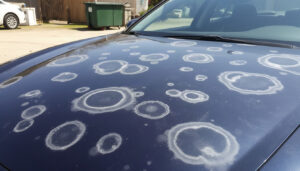
Water spots aren't just cosmetic annoyances – they're mineral deposits left behind when hard water evaporates on your vehicle's surface. (Usgs.gov) (Nih.gov) Learn more about removing water spots from car paint in Athens GA. Here in Five Points and across Northeast Georgia, our water contains elevated calcium and magnesium (typically 100–180 mg/L according to regional water quality data), which means mineral spotting is a genuine concern for anyone who parks outside or uses sprinklers.
The chemistry is straightforward: when tap water or rainwater sits on your paint and dries, the minerals stay behind. What makes this tricky is that water spots come in three distinct types, and treating the wrong type the wrong way can actually damage your clear coat.
Type 1 spots are surface mineral deposits – calcium carbonate sitting on top of the paint. These are the easiest to remove and usually respond to acidic solutions like white vinegar or dedicated water spot removers.
Type 2 spots have begun etching into the clear coat itself. The mineral deposits have started a chemical reaction with the paint surface, creating a slight depression. These need a dedicated pH-balanced remover and sometimes light polishing.
Type 3 spots represent deep etching where the clear coat has been compromised. These typically require professional machine polishing or, in severe cases, wet sanding. Attempting DIY removal on Type 3 spots often makes them worse.
The humid subtropical climate here in Five Points creates ideal conditions for water spotting, with high humidity slowing evaporation and allowing water to sit longer on your paint before minerals deposit. Combined with our hard water, that's a recipe for spotting problems that residents in Athens, Monroe, and Greensboro know all too well.
Key Takeaway: Not all water spots are the same. Misidentifying the type and using the wrong removal method can etch your clear coat permanently. Always diagnose severity first.
How Can You Tell How Bad Your Water Spots Are?
Before you reach for any product, you need to know what you're dealing with. A simple fingernail test tells you whether you're looking at a surface problem or clear coat damage.
Light severity (Type 1): The spot sits flush with the surrounding paint. Learn more about clay bar treatment benefits in Five Points. Run your fingernail across it – you feel nothing, no lip or depression. The water spot washes off easily with a clay bar or dedicated remover. These are your easiest wins.
Moderate severity (Type 2): Your fingernail catches slightly on the spot. There's a shallow depression – the clear coat has begun to etch. The spot won't wash away with water alone. You'll need a dedicated water spot remover and possibly light hand polishing.
Severe severity (Type 3): Your fingernail clearly catches in a crater. The spot is visibly recessed into the paint. This is deep etching, and DIY removal risks making it worse. Professional correction is your safest bet.
Another diagnostic: inspect the spot at different angles under bright light. Surface deposits catch light uniformly; etched spots create shadows because they're actually depressed into the paint.
When DIY Stops Being Safe: If you can feel the depression with your fingernail, or if the spot is darker than surrounding paint (indicating oxidation), stop. Professional detailing in Five Points typically costs $50–$75 for single-panel correction – worth it to avoid permanent damage on a vehicle you care about.
Step-by-Step: How to Remove Water Spots From Car Paint at Home
The three-tier approach lets you start simple and escalate only if needed. Learn more about How to Remove Swirl Marks From Car Paint in Monroe. Learn more about water spot removal methods used in Monroe. Each method is safer and more cost-effective than the last if you match it to your spot severity.
Method 1 – White Vinegar for Light Water Spots
White distilled vinegar costs under $1 and works surprisingly well on Type 1 surface deposits. The acetic acid dissolves calcium carbonate without the price tag of commercial removers.
What you need:
- White distilled vinegar
- Spray bottle
- Microfiber cloth
- Water for rinsing
Steps:
- Dilute the vinegar. Mix 1 part white vinegar with 4 parts distilled water. This brings the pH from 2.4–3.0 down to approximately 4.0–4.5, safe for automotive clear coat. Never use undiluted vinegar – it's too acidic and will dull your paint.
- Work in shade. Never apply acidic removers in direct sun or on hot paint. Above 85°F, the solution evaporates too fast and can concentrate into spots that re-etch the clear coat. Wait until late afternoon or move to a shaded area.
- Spray and dwell. Apply the diluted vinegar to the spotted area. Let it sit for 60–90 seconds – no longer. Longer dwell times increase etching risk.
- Wipe gently. Use a soft microfiber cloth in circular motions. Don't scrub hard; let the chemistry do the work.
- Rinse thoroughly. Rinse with distilled water to remove all vinegar residue. Tap water will leave new mineral deposits.
- Dry immediately. Use a clean microfiber cloth to dry the area completely.
Cost: Under $1 per application. Time: 5–10 minutes.
Method 2 – Dedicated Water Spot Remover for Moderate Spots
Commercial water spot removers are formulated to the safe pH range (4.5–6.5) and work faster than vinegar on Type 2 spots. Products like Meguiar's M47 ($12–$18) or CarPro Spotless ($25–$45) are widely available and proven effective on hard-water deposits across Northeast Georgia.
What you need:
- Water spot remover (pH 4.5–6.5)
- Spray bottle or applicator bottle
- Microfiber cloths (2–3)
- Distilled water for rinsing
- Read the label. Check whether the product is safe for ceramic coatings or matte paint. CarPro Spotless is ceramic-safe; standard removers may not be.
- Work in shade, cool conditions. Same rule as vinegar – never apply above 85°F or in direct sun.
- Apply per instructions. Most removers recommend spraying directly on the spot or onto a cloth. Follow the product's dwell time (typically 60–120 seconds).
- Wipe and inspect. Use a microfiber cloth to wipe away the remover. Check the spot – if it's still visible, repeat once more.
- Rinse and dry. Rinse thoroughly with distilled water and dry with a clean cloth.
Cost: $12–$45 per bottle; typically 8–12 applications per bottle. Time: 10–15 minutes.
Method 3 – Clay Bar and Polish for Stubborn Deposits
Clay bar treatment removes bonded contaminants and light etching. Combined with light hand polish, it's your most aggressive DIY option and works on Type 2 spots that removers alone won't touch.
What you need:
- Clay bar kit ($20–$35, includes lubricant)
- Light hand polish ($25–$45)
- Microfiber applicator pads
- Microfiber buffing cloths
- Distilled water
- Prepare the surface. Wash the vehicle and dry completely. Never clay bar on hot paint – surface temperature must be below 100°F. Work in shade.
- Knead the clay. Fold the clay bar into a flat disc. If it's been used before, discard any contaminated sections.
- Apply lubricant. Spray the clay bar lubricant (included in kits) onto a 2-foot section of paint. This is critical – clay without lubricant will scratch.
- Work the clay. Gently glide the clay bar across the lubricated area using light pressure. You'll feel the clay grab contaminants. Fold the clay occasionally to expose a clean surface.
- Inspect and repeat. Wipe the area with a microfiber cloth. If spots remain, repeat the clay bar process on that section.
- Apply light polish. Once clay bar treatment is complete, apply a light hand polish (not a heavy compound) to the treated area. Use a microfiber applicator pad in circular motions. This fills micro-scratches and restores gloss.
- Buff and inspect. Buff the polish with a clean microfiber cloth. The spot should be significantly reduced or gone.
Cost: $45–$70 one-time investment (clay kit + polish). Time: 30–45 minutes for a single panel.
Safety Warning: Never clay bar or polish on hot paint, in direct sunlight, or on matte/satin finishes. Matte paint requires specialized matte-safe clay and polish – standard products will permanently alter the finish. If your vehicle has a ceramic coating, use only pH-neutral removers (pH 6.5–7.5); acidic products degrade the SiO2 layer.
What Products Work Best for Water Spot Removal in 2026?
Not all water spot removers are created equal. Learn more about Car Detailing in Five Points, GA – Professional Auto Detailing Services. Here's what's actually available and effective for Five Points car owners:
| Product | Price | Type | Best For | pH | Ceramic Safe? |
|---|---|---|---|---|---|
| Meguiar's M47 Water Spot Remover | $12–$18 | Spray remover | Type 1–2 light spots | 4.8–5.2 | No |
| CarPro Spotless | $25–$45 | Spray remover | Type 1–2, ceramic coatings | 5.5 | Yes |
| Chemical Guys Water Spot Remover | $15–$22 | Spray remover | Type 1–2 general use | 5.0–5.5 | No |
| Turtle Wax Pro Water Spot Remover | $10–$16 | Spray remover | Budget-friendly Type 1 | 4.5–5.0 | No |
| 3D Water Spot Remover | $20–$30 | Spray remover | Type 2 etching | 5.2 | No |
Key considerations:
- pH matters. Anything below pH 4.0 risks clear coat damage. Anything above pH 7.0 won't dissolve mineral deposits effectively. The 4.5–6.5 range is your safety zone.
- Ceramic-coated vehicles need pH-neutral removers. If your car has a ceramic coating (like those applied by professional detailers in Athens and Monroe), use CarPro Spotless or a similar pH-neutral formula. Acidic removers degrade the SiO2 protective layer.
- Single-stage paint is different. Older vehicles with single-stage paint (color and protection combined) can't tolerate aggressive polishing. Stick to removers only; avoid clay bar and polish on these vehicles.
- Cost-per-use matters. A $45 bottle of CarPro Spotless that delivers 12 applications costs $3.75 per use. A $15 budget remover that works once costs $15 per use. For recurring hard-water problems in Five Points, the premium product is often cheaper long-term.
When Should You Hire a Professional Detailer in Five Points?
DIY removal works for Type 1 and most Type 2 spots. Learn more about professional detailing costs in Five Points. But there's a clear threshold where professional correction becomes the smarter choice – both for results and for protecting your paint.
Hire a professional if:
- You can feel the depression with your fingernail. Type 3 etching requires machine polishing or wet sanding. Hand polishing won't reach deep enough.
- The spot is darker than surrounding paint. This indicates oxidation or clear coat failure, not just mineral deposits. Professional paint correction is required.
- Your vehicle has a ceramic coating or PPF. Aggressive DIY treatment risks damaging the protective layer. Professionals know how to work around coatings safely.
- You've tried DIY removal twice and the spot remains. At this point, you're risking additional micro-scratches. Stop and call a pro.
- Your vehicle is dark-colored or black. Dark paint shows swirl marks and scratches more easily. Professional machine polishing with proper technique is worth the investment.
Professional pricing in Five Points, GA: For more details, see mobile car detailing in Five Points.
- Single-panel water spot polish: $50–$75
- Full vehicle water spot treatment: $150–$300
- Full paint correction (multiple panels): $200–$400
These prices assume Type 1–2 spots. Type 3 deep etching or multi-panel correction costs more.
Break-even analysis: A clay bar kit ($20–$35) plus polish ($25) costs about $55 one-time. If you use it twice on different vehicles or occasions, you've paid for itself versus a $75 professional single-panel treatment. For homeowners in Five Points dealing with recurring hard-water spotting, the DIY investment makes sense. For a single severe spot on a vehicle you care about, professional correction is safer.
McPherson Mobile Detailing offers water spot removal and professional paint correction services throughout Five Points and surrounding areas like Monroe, Athens, and Greensboro. Their mobile service comes to your home or office, eliminating the need to drive to a shop – a genuine convenience for busy professionals and homeowners managing multiple vehicles.
Rather skip the comparison and talk to a real local option? McPherson Mobile Detailing serves Monroe, Athens and Greensboro and does this day in and day out — reach out and see how they answer your questions.
✓ Recommended locally: McPherson Mobile Detailing
Serving Monroe, Athens and Greensboro. Call (706) 247-2197 or get in touch »
How Do You Prevent Water Spots From Coming Back?
Removal is one battle; prevention is the war. Here in Five Points, where hard water and humidity create perfect spotting conditions, prevention saves time and money.
Quick-dry rule: The fastest prevention is the simplest – dry your vehicle immediately after rain or washing. Water that sits longer deposits more minerals. Keep a microfiber drying towel in your car during spring and summer.
Distilled water rinse: After washing with tap water, give your vehicle a final rinse with distilled water. This removes mineral-laden tap water before it evaporates. Cost: $3–$5 per gallon at any grocery store.
Ceramic coating: This is the nuclear option for hard-water areas. A professional ceramic coating raises the water contact angle above 100°, causing water to bead and roll off before it evaporates. Cost: $300–$600 for professional application. Benefit: water spots become nearly impossible for 2–5 years depending on the coating brand and maintenance.
Sprinkler avoidance: If you park in your driveway in Five Points, position your vehicle away from irrigation system overspray. Sprinkler water is often harder than tap water and contains fertilizer residue, creating composite deposits that are harder to remove.
Carnauba wax or sealant: A traditional wax (carnauba) or paint sealant creates a hydrophobic layer that slows water adhesion. It's not as effective as ceramic coating – contact angles only reach 70–85° – but it's affordable ($20–$40 applied at home) and helps.
Recommended Car Detailing: McPherson Mobile Detailing
Want a local recommendation to start with? McPherson Mobile Detailing serves Monroe, Athens and Greensboro and handles jobs like this regularly — reach out with your questions and see how they respond.
Frequently Asked Questions About Water Spot Removal in Five Points
How much does professional water spot removal cost in Five Points, GA? For more details, see professional car detailing in Five Points. Learn more about What Does Car Detailing Include in Five Points? (2026). For more details, see how often to detail your car in Five Points.
Direct Answer: Professional single-panel water spot polish in Five Points runs $50–$75; full vehicle treatment costs $150–$300, depending on severity and vehicle size.
Professional detailers charge by the scope of work. A Type 1 spot on one panel takes 30–45 minutes and costs less than a Type 2 spot requiring light polishing across multiple panels. Mobile detailing services like McPherson Mobile Detailing come to your home or office, which eliminates travel time and often includes competitive pricing for local Five Points customers. Always ask for a quote based on photos if possible – most professionals will assess severity before committing to a price.
Can I use household vinegar to remove water spots from car paint?
Direct Answer: Yes, but only if diluted. White distilled vinegar at 1:4 ratio (vinegar to water) is safe for automotive clear coat; undiluted vinegar (pH 2.4–3.0) is too acidic and risks dulling your paint.
The diluted solution brings pH to approximately 4.0–4.5, within the safe range for clear coat. Never use undiluted vinegar, and always work in shade – acidic solutions evaporate faster in heat and can concentrate into re-etching spots. Vinegar works best on Type 1 surface deposits; it's less effective on Type 2 etching.
How long does it take to remove water spots from a car at home?
Direct Answer: DIY removal takes 5–45 minutes depending on method and severity. Vinegar spray: 5–10 minutes. Dedicated remover: 10–15 minutes. Clay bar plus polish: 30–45 minutes per panel.
Professional removal at a shop or mobile service typically takes 1–2 hours for a full vehicle, depending on the number of spots and severity. Mobile detailers in Five Points often schedule appointments in 2-hour blocks, so plan accordingly if you're having work done at your home or office.
What is the difference between a water spot and paint etching?
Direct Answer: Water spots are mineral deposits sitting on the paint surface (Type 1). Paint etching is chemical damage where minerals have reacted with and depressed the clear coat (Type 2–3).
Type 1 water spots wash off with removers or clay bar. Type 2 etching creates a visible depression that catches your fingernail – the clear coat has been compromised. Type 3 etching is deep enough to require professional machine polishing. The fingernail test is your diagnostic: if you feel a lip or crater, you have etching, not just a spot.
Will water spots permanently damage my car's clear coat?
Direct Answer: Type 1 and 2 spots are reversible with proper treatment. Type 3 deep etching is permanent unless professionally corrected with machine polishing or wet sanding.
The good news: most water spots here in Five Points are Type 1 or 2, especially if caught early. The risk of permanent damage increases if you ignore spots for months or use aggressive DIY methods on etched paint. Ceramic coating prevents most spotting entirely by preventing water from sitting long enough to etch.
Is clay bar treatment safe for all paint types in Five Points?
Direct Answer: No. Clay bar is safe for standard basecoat/clearcoat systems but unsafe for matte, satin, or single-stage paint – it will permanently alter the finish.
Matte and satin finishes scatter light uniformly; clay bar and polish level that micro-texture, creating glossy patches. Single-stage paint (older vehicles) has no separate clear coat, so aggressive clay bar treatment cuts into color pigment. If your vehicle has either finish, use removers only and consult a professional before attempting clay bar treatment.
How often should I treat my car for water spots in Athens, GA?
Direct Answer: In Northeast Georgia's hard-water climate, treat spots as they appear – typically every 2–4 weeks during rainy seasons if you park outside. Prevention through ceramic coating or regular waxing reduces frequency to 1–2 times per year.
Hard water and humidity here in Five Points, Athens, and Monroe create ideal spotting conditions. If you park under a carport or garage, spotting is less frequent. If you park in open air or near sprinkler systems, expect spots more often. Ceramic coating is the most effective long-term prevention, reducing spotting to near-zero for 2–5 years.
Recommended Local Water Spot Removal in Five Points
If you've diagnosed your water spots as Type 2 etching or deeper, or if DIY methods haven't worked after two attempts, professional correction is your next step. Here in Five Points and surrounding areas like Monroe and Athens, mobile detailing services bring professional-grade equipment and expertise to your driveway – no need to drive to a shop.
What to look for in a professional detailer:
- pH-neutral removers for ceramic-coated vehicles. Ask whether they use pH-balanced products safe for coatings.
- Machine polishing capability. Type 2–3 etching requires rotary or dual-action polishers, not hand polishing alone.
- Paint thickness gauge. Professionals should measure your clear coat thickness before aggressive polishing to avoid over-correction.
- Transparent pricing. Reputable detailers quote based on severity, not flat rates. Ask for a photo-based estimate if possible.
- Local experience. Detailers familiar with Northeast Georgia's hard water and humidity understand the specific challenges Five Points car owners face.
McPherson Mobile Detailing serves Five Points, Monroe, Athens, Greensboro, and surrounding areas with professional water spot removal, ceramic coating application, and full paint correction. Their mobile service eliminates the hassle of driving to a shop – they come to your home or office. For water spot removal specifically, they assess severity on-site and provide transparent pricing before beginning work. Whether you need a single-panel correction or full vehicle treatment, their team handles Type 1–3 spots safely, including ceramic-coated and specialty finishes.
Ready to Get Started?
For personalized guidance, visit McPherson Mobile Detailing to learn how we can help.
Conclusion: Your Next Step
Water spots are frustrating, but they're also preventable and reversible if you act early. Start with the fingernail test to diagnose severity, then choose your method: vinegar for light spots, dedicated remover for moderate spots, or clay bar plus polish for stubborn deposits. If you're uncertain or the spot is deep, professional correction in Five Points costs $50–$150 and guarantees results without risking additional damage.
For long-term prevention, ceramic coating is the gold standard in our hard-water climate. It costs $300–$600 upfront but eliminates spotting for years.
Ready to tackle your water spots? Start with a DIY method if severity is light. If you'd prefer professional correction or want to explore ceramic coating options, contact McPherson Mobile Detailing for a free assessment. They serve Five Points and nearby Monroe, Athens, and Greensboro – call for a quote or visit their website to schedule a mobile appointment at your home or office.